With C14/C13 in a shunt, one common flue under positive pressure goes into the main duct, with a tee per boiler. You choose between rigid stainless steel, PZ C14 Star in black PP or PR C14 Flexible.
Read more
Enter the number of appliances and the height above to see which parts you need.
How C14 and C13 work in a shunt
All boilers discharge into one column in the main duct of the shunt. Each boiler has a tee in that column. With C14 the air enters at the top of the shaft and flows down around the column, in counterflow with the flue gas. With C13 there is also one common flue, but each appliance takes its air separately. Both are approved as one unit with the boiler.
Only use boilers approved for a collective flue under positive pressure, C(10) or C(14), according to gas.be (NBN D 51-003 annex E). Each boiler has backflow protection, built into the boiler or with a flap. The concentric connection has a fall of at least 3° towards the boiler.
In the shunt the partition may be drilled through, so the branch ducts also supply air. Old connections and hatches are closed, no other pipes run in the shaft and ventilation of the dwellings is arranged separately.
Three versions
| Rigid stainless steel | PZ C14 Star | PR C14 Flexible | |
|---|---|---|---|
| Material | Stainless steel 316, IE range | Rigid black PP | Flexible PP |
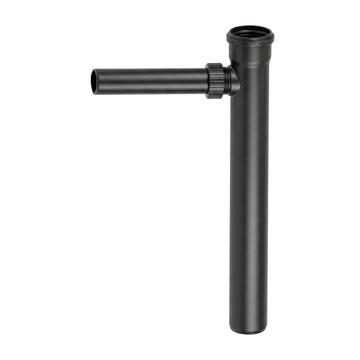
| Tee | With ø80 branch | With screw-off connection pipe ø60 or ø80 | Connection set per boiler |
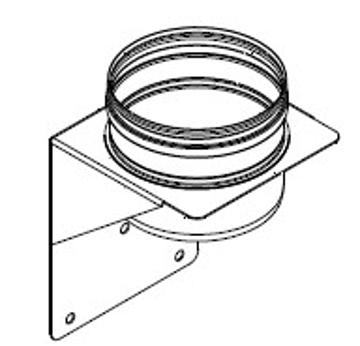
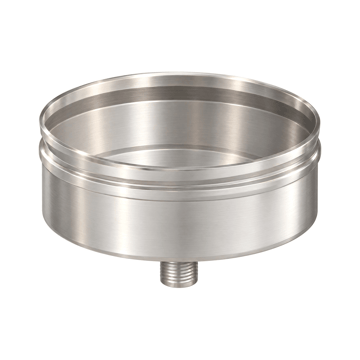
| At the bottom of the shunt | Starter support plate | Support foot and condensate drain | Base set and condensate element |
| Expansion | No separate part | Absorber under each tee | Taken up by the flexible liner |
| Choose this if | The main duct is straight and you want stainless steel | The main duct is straight and you want one ø130 mm core hole per boiler | The shunt has offsets or is not straight |
With PZ C14 Star the column is lowered from the top without the connection pipes. On each floor you drill one ø130 mm hole through the shaft wall and screw the 500 mm connection pipe onto the branch. With PR C14 Flexible there must be at least 2.5 m of liner between two connections.
How to build your list, from top to bottom
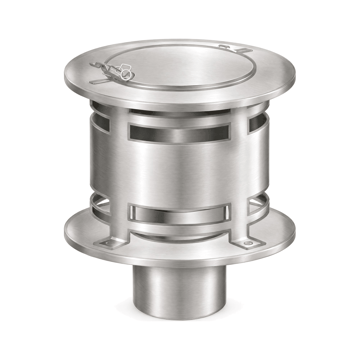
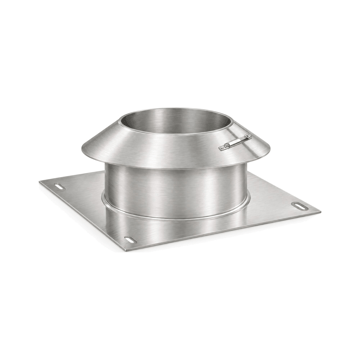
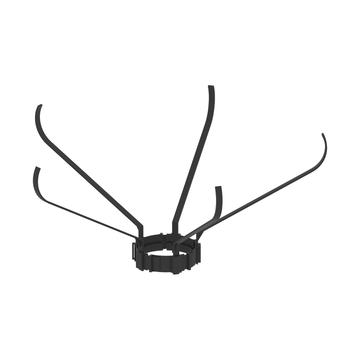
- Top: draught cap and shaft cover plate with storm collar (stainless steel), or terminal with spacers (PZ C14 Star).
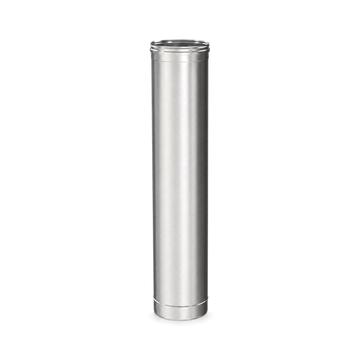
- Pipes up to the highest tee, and between the tees.
- One tee per boiler. With PZ C14 Star an absorber goes under each tee.
- One connection set per boiler: concentric pipe with finishing plate or rosette.
- Bottom: condensate drain and siphon for positive pressure.
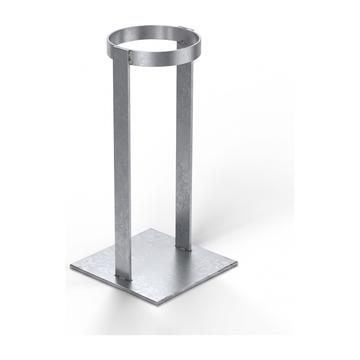
- Base: starter support plate (stainless steel) or support foot (PZ C14 Star).
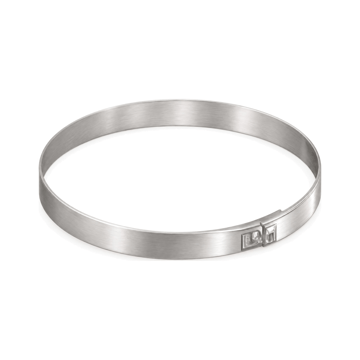
- For stainless steel: a clamping band on every joint.
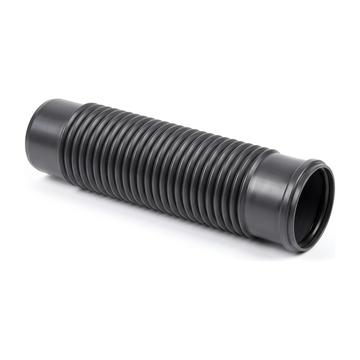
For PR C14 Flexible the order is: mounting set at the top, liner, one connection set per boiler, base set and condensate element at the bottom.
Frequently asked questions
What is the difference between C14 and C13?
Both have one common flue. With C14 the air comes through the shaft around the flue, with C13 each appliance has its own air supply.
What diameter does the column need?
It follows from a calculation to EN 13384-2, with the number of boilers, their output, the height and the size of the main duct. Send us the data and we will check it.
Why an absorber under each tee with PZ C14 Star?
Rigid PP expands by about 0.16 mm per metre per degree, over 4 cm on a 3 m floor. The tees are fixed in the wall, so the absorber takes up that length.
Do all boilers have to be replaced at the same time?
Yes. All appliances on the shunt move to the new flue together, because no flue gas may enter the shaft any more.